Saturday, May 31, 2014

Guteng morgen Austria!

Ahhh, Vienna and Salzburg…world-wide renowned cities by their stunning architecture, imperial traditions, unique coffee houses and delicious Sacher-torte! These fantastic cities at the heart of Austria completely gobsmacks me not only by their cultural wealth, thus by the creative marketing displays and brand extensions seen while exploring both metropolises. Nonetheless, it shocked me the brilliant coexistence between centuries-old brands and the new ones. This is the core essence of such a beguiling and enchanted country that everyone should visit. In this blog post I’ll take you for a walk around Austria, but seen through a marketer’s eyes. Hope you all enjoy the ride as much as I did!


After having dinner with family close to the Austrian parliament, I discovered a very clever bus-stop advertisement made by Nespresso. The “All U need is Milk” campaign sought to promote the Umilk machine and the Aeroccino functionality. The latter prepares a divine milk froth, which is a perfect complement for your morning caffé lattes. Nespresso’s thorough understanding of consumer needs played a fundamental role in the process of developing and launching such an innovative and valuable coffee machine into the market.


"All U Need is Milk" creative bus-stop display. Vienna, Austria

RedBull Collection shopping window. Salzburg, Austria
After visiting Vienna we took a train to Salzburg. As soon I stepped foot in the “Salt Fortress”, (i.e. name given to the city centuries ago due to its massive salt mines) I visited the RedBull store in Getreidegasse St. The shop is divided into two ambiences. The typical Red Bull extreme sports lifestyle apparel area and the Red Bull Collection domain. The second one really caught my eye. This section has been devoted to smart casual clothing, targeted mainly to young and urban adults with an irreverent and rebellious lifestyle. These people are looking for an unorthodox brand that makes them feel like there’s no tomorrow (i.e. carpe diem) and that every day should be lived as it was your last one. Hats off to Redbull, this is such a brilliant way to stretch the brand and connect meaningfully with its target audience. If you fancy watching the amazing Red Bull clothing collection ads just click here.


The famous Sachertorte. Salzburg, Austria
Vienna and Salzburg are cities brimming with history and part of this history has been written out by the Sacher Hotel. It was founded in 1876 by Franz Sacher, confectioner that invented, whilst doing his apprenticeship at the royal palace, the world-famous chocolate cake, Sachertorte. The Sacher Group produces more than 360,000 pieces every year by hand. You can buy a torte in its online store or physical shops. The cake is wrapped up with a minimalistic wooden-box, that makes the cake stand out.


Range of chocolate spoons. Winter Market, Vienna
Franz Sacher’s chocolate cake legacy has a true impact in the way the hotel chain is driven. Hotel toiletries are made from cocoa and you can even receive a chocolate-base massage in the spa! All marketing cues are related to having a moment of self-indulgence and enjoyment. In contrast to this long lasting enterprise, I discovered in a Viennese Christmas Market a brand that sells a range of innovative hot chocolate spoons. The company offers heaps of alcoholic and non-alcoholic spoon combinations. This creative business idea in new markets could open a window of opportunity!


Friday, July 26, 2013

Which is the Best Social Network Platform? “Benditos Bares"


In the last month, I’ve followed the latest Coca Cola Iberia communication campaign called "Benditos Bares". The firm contrives the campaign to connect meaningfully with the Spanish market and boost bars economic activity, why’s that? Because for Spaniards bars are a cultural symbol, it’s part of their lifestyle and of their identity. This cultural linkage is so strong that in towns and villages the only place to gather and socialize with people it’s at the bar. So, imagine the relevance of this place for Spaniards!

An investigation developed by Quota Research concluded that Spanish people frequently visit bars, 45% do it during the weekend and 37% between 2-3 times per week. Further research from Coca Cola aroused than 84% of the population associate bars with moments of happiness and joy and 44% of the sample said that they met in a bar their best friend or couple!

These findings are fully aligned with Coca Cola’s strategy based on inspiring moments of optimism and happiness. A study organized by the brand highlights the fact that the economic downswing has caused the closure of more than 50.000 venues. Because of this and many other factors such as the continued weak consumer confidence and aggressive competitive pricing Coca Cola Iberia decreased it sales in 1%(2012). In lieu of the accelerated growth lived during the period of 2009 till 2011. Therefore, the negative economic outlook is an important reason behind launching such a vast marketing initiative. 


The brand availed all this to make use of it for the “Benditos Bares” campaign. The budget for the marketing stunt is greater than €10 million ($13M; £9M) and it aims to exhort consumers to visit bars with friends, bolster their sense of belonging and foster consumption. The summer campaign (May-Sept) has been divided in two phases, the awareness stage and the call to action one. The former communicates with consumers in an emotional level exalting bars’ relevancy as a social centre. Also, it will be rolled out during the entire summer. The latter conceived San Bar-Tolo’s Day (29th June), were every Spaniard had to stop with friends at a bar to have at least a Coke.


1st Ads - "Bars as social centre"

  2nd Ads - "Let's support our bars!"


The soft drinks company is carrying out an Integral Marketing Campaign mingling above the line and below the line communication channels such as TV, radio, billboards in metro stations, San Bar-Tolo’s Day sales promotions (e.g. every Coke in a bar was sold for €1 instead of the average price of €2 and as a reward participants received a red bow tie and free tapas). Moreover, social media platforms such as Twitter, Facebook and Youtube are playing a major role in this campaign. 


During SanBar-Tolo’s Day, Coca Cola encouraged people to share through the hashtag #BenditosBares their cheerful moments spent with friends in a bar. To keep up going the online conversation Coca Cola used key influencers to chatter about the event such as Nena Daconte, David Bustamante, Sevilla Football Club, Hugo Pierna and many other public figures. 

Hitherto we don’t have enough information yet to evaluate the overall performance of the campaign. But, consumers’ engagement through Social Media during the day of the event can give us a good hint of how successful the campaign was it. Coca Cola’s hashtag #BenditosBares cast off an engagement 6.3*1 ratio. To put it in context, I compare it with the latest Redbull’s event hashtag #Xfighters which throw off a 5.7 ratio. It should be highlighted that social media interaction with both events was massive! But it surprised me that RedBull got twice as much hashtags than Coca Cola. But on the other hand, Coca Cola received more visual content and retweets than RedBull. This shows that the depth and loyalty of Coca Cola’s consumers is much higher. 

From my point of view Coca Cola once again develop a brilliant campaign. Why? Because the brand remains aligned with its business strategy, it was locally relevant and finally but not less important it conveyed a very emotional message that will help them to build stronger bounds with its customers and connect deeper with its consumers.

*1 Engagement ratio formula: 

E.R= (# of hashtags + # tweets + # retweets + # favourites + # Multimedia content) / #Followers


Friday, June 21, 2013

Loewe goes back to its Roots


Some weeks ago, I was walking through Serrano Street, Madrid’s most luxurious shopping area. During my walk Loewe’s spring collection piqued my interest.  The Madrilenian purveyor of luxury leather goods did an outstanding job through its global campaign, displaying its Spanish heritage and more than 168 years in business. Within this article I’ll delve into a study of Loewe’s strategy, its campaign’s implementation and I’ll write about the importance of heritage branding and how it affects consumers’ purchase decision processes. 


Loewe is different from the rest because of its long lasting tradition and expertise producing the best leatherwear articles. The prestige brand stands for a type of elegance without ostentation. Its core values are being proud of our traditions and to be free and do what we please. Moreover, its consumers also stand up for these values. This psychographic segmentation allows the brand to deeply connect with its target market. The brand objective in the upcoming years is to keep up increasing sales, raise awareness among consumers and to open new stores in different countries around the globe. Mostly, in the Asian market. 


The brand did a superb job translating its business strategy into market implementation at the point of sale and within its communication campaign. The former is an immersing experience into the Spanish and Madrilenians’ lifestyle. The store’s shop windows expose images reinforcing the artisanal work behind each product. Some pieces are inspired on traditional Spanish footwear, accessories and clothing such as “alpargatas”, fans and “shawls”. On the other hand, Loewe aims to target generation Y (i.e. 70’s and 80’s), it focused most of its communication efforts in a digital campaign using tools such as social media platforms, its webpage, and live stream events. The advertising face and brand ambassador of the campaign is Penélope Cruz. Loewe’s marketers said that she fits perfectly with the brand because, nowadays, she is the most famous woman and personality in Spain.


 Loewe Spanish heritage campaign makes sense because of the socio-cultural context and the unwavering commitment of the brand to achieve its purpose.  Currently, we live in a world of uncertainty, where consumers more than ever distrust firms and give more importance to aspects such as consistency, quality, craftsmanship, authenticity and familiarity. Embracing these elements allows brands to build a competitive advantage, ameliorate the depth of consumers’ awareness and their perceived value of the brand. This allows firms to set a higher price point for its products/services.


In light of the above, Loewe’s long-lasting history exhibits stability, as well as consistency of its mission, vision and values. The correct bounding of the elements mentioned before permits brand custodians to elaborate a convincing story. This helps the brand to emotionally connect with consumers, enhance trust, build customer loyalty and reputation - in a nutshell it helps building stronger brand equity.  


I’ll like to state the fact that I’m a great believer in brand heritage, which is the connection of a brand to its past (i.e. people, places, and purpose at the beginning). I consider heritage branding as a long-term business objective compass point. Brands’ legacy not only helps identifying firms’ strengths, also it pinpoints previous successes and mistakes and educates us for future decisions. Moreover, through cues and tales marketers can enhance customers and employees admiration and pride for the brand. As discussed, Loewe is a perfect example of this. The Spring Collection shows employees’ understanding of the soul & spirit of the brand and how to interconnect the present with its past.  


To wrap up, I’d like to say that every brand should work in its own storytelling, based in a consistent and unique mission, values and purpose. If a brand does this correctly, it will experience the benefits of heritage branding!


Monday, January 21, 2013

Marketing Campaign Execution, Chanel Nr. 5


On the past months we have been exposed to a massive advertising campaign launched by Coco Chanel to promote its top of the line and historical fragrance, Chanel No. 5. I saw it for the first time during Christmas walking through London’s shopping district. Streets were invaded by Brad Pitt’s face. I thought, henceforth, that the firm was launching for the first time a perfume focused on the men segment. 

This interesting used of advertising got mi attention so I went to the first high end department store that I found on my way and asked a Chanel’s shop assistant if that product was for men. Promptly she told me that it wasn’t a product for gents that it was targeted for the female market.

At this point, I was confused. So I decided to search online more about the reasons behind this advertisement and later on analyse with a strategic marketing point of view if it was right or wrong. Certainly, the campaign has been extremely controversial among the marketing community and the general public. Most of the people have been extremely critical and superficial studying its meaning. Personally I think that it’s one of those brilliant ideas, where the marketing team finds a great insight, develops a good message, but, somewhere down the road the message gets distorted. From my perspective this happened because of an inadequate communication    
 between the firm and its advertising agency  i.e. they were at cross purposes

The insight behind the ad is about “women’s spirit” seeing through the eyes of men, says Brad Pitt. For me this insight has a deep and meaningful message. Perfumes’ first trace back to the Mesopotamian and Egyptian era. It was used for religious and cosmetic purposes. Also, it is believed that the Egyptian queen Cleopatra used special fragrances, which helped her to enchant Julius Caesar and afterwards Mark Anthony. This triangle between women, perfume and men has existed since time immemorial. Brad Pitt’s argument explains that perfume help men revive in their mind memories of their beloved women and impeccable insight!

The problem came when the advertising agency decided to have Brad Pitt as the central figure of the ad. The advert’s director got lost with Brad Pitt’s halo rather than to expose clearly the message to the final consumer. Even though this was a big misinterpretation of the message the buzz around the ad has been huge, nowadays, more than 7,669,969 people have seen the commercial on YouTube. This helps Chanel to increase its brand awareness, relevance and maybe differentiation among consumers. Finally, to evaluate Chanel Nr.5 campaign’s performance we’ll have to wait until Chanel releases its quarterly financial report.
From a marketing perspective I can concluded that the most important thing in a marketing plan is to communicate effectively your brand message. Everything else is just minor tweaks on the master piece. This is what I missed in Chanel Nr.5 advertising campaign. 


“It's not a journey. Every journey ends, but we go on. The world turns and we turn with it. Plans disappear. Dreams take over. But wherever I go, there you are. My luck, my fate, my fortune. Chanel No. 5. Inevitable.”


Wednesday, January 9, 2013

Tiffany’s an effective social media strategy through Twitter


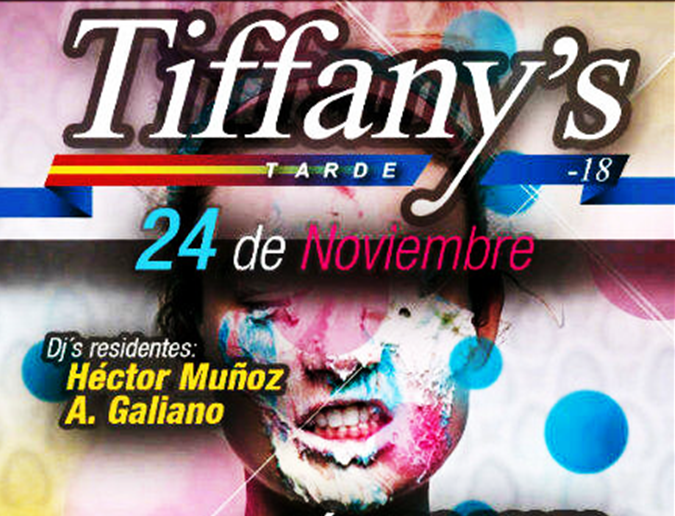
Tiffany’s is a club that started operating 2 years ago in Madrid. They have used a very effective promotional strategy to position its product as one of the most recognized clubs in Madrid, among the 18-25 year old trendy and posh segment of Madrid.


On September 22nd evening I was passing just in front of Tiffany’s and I got such a surprise, the entrance of the place was packed with very young and well-dressed people between the ages of 14-18 trying to get inside. Consequently, I asked myself some questions, such as: how did the club attract so many people? How did it gather together such a homogeneous group in the same place at the same time?  And what promotional channel the business used to attract this segment?


To start with, I identified that the best promotional channel to boost this kind of events was through social media platforms, mainly because its customer base is full of youngster and it can be used as a hyper targeted promotional method. Therefore, I made a research on Facebook and Tuenti and to my amazement the night club did not have any presence on these channels. Afterwards, I checked Twitter only to verify that they were not using this tool. I thought that people interested on micro blogging was an older audience with the aim of being up to date in real time about news and businesses. Thus to my surprise Tiffany’s was using Twitter 
as its main promotional method to attract its target 
segment to its business. The club follow up around 
2.000 people and 1.400 people follow it.


Henceforth Tiffany’s in order to implement its promotional campaign identified its target segment very well (i.e. students from the best schools of the city). The next step was to attract some students from these schools to become PR representatives of the club. Afterwards, they did on Twitter a massive follow-up of the representative’s friends and students from these schools. Also, during this process mentioned above the club start publishing content that was appealing to potential customers and make a clear call to action. Tiffany’s still after the launching effect still publish interesting facts and information of future events to retain its customers and create a loyal customer base. If important to highlight the fact that any company that invest in social media platforms should be completely confident of its efficiency because is a long term commitment, customer’s relationship is not build for one day to another. It needs time to manage and create appealing content and firms should be consistent in their communication and in keeping the relationship going with consumers.


The launching event attracted more than 2.000 youngsters. Therefore, this is a very good example of how to promote an event through social media platforms. With the use of hyper targeted techniques and a good mix of the appropriate advertising and promotion with the aim of connecting with its target market. This case shows the potential of using social media for businesses, not only as a tool to create awareness among its audience. Whereas to increase its numbers of potential customers and consequently translate this investment into sales.   

Sunday, September 2, 2012

Why does Lisbon have a similar bridge to San Francisco’s famous Golden Gate Bridge and a Christ the King monument like the emblematic Corcovado in Rio de Janeiro?

The first thing that came to my mind, when I cross the Tagus River through the "25 de Abril" bridge, was its similarity to San Francisco's Golden Gate. Consequently, I decided to investigate if they were sister bridges.


I researched and found that the structure of the "25 de Abril" bridge wasn't inspired by the famous Golden Gate. The latter, was constructed in 1937, its conception was from the visionary architect Joseph Strauss. The art deco design of the bridge was conceived by the designer Leon Moisseiff and the construction was commissioned to the McClintic-Marshall Construction Co. On the other hand, the "25 de Abril" bridge was constructed in 1966 during the government of the Portuguese dictator António Salazar. In his honor the given name to the construction was the Salazar Bridge. 
http://farm7.staticflickr.com/6194/6136431142_f20657802d_z.jpg
25 de Abril Bridge, Lisbon

San Francisco's Golde Gate bridge
 The American Bridge Co. was commissioned to construct the "25 de Abril" bridge. Its structure was inspired by the Bay Bridge that connects San Francisco to Oakland. This bridge was conceived to resist earthquakes. Likewise, the 25 de Abril bridge is located in seismic area. That's why it was erected with a similar design.

  The Salazar Bridge's name was changed after the Carnation Revolution in 1974. This was a peaceful military and civilian movement that sacked the dictator of power. The revolution concluded on April 25th, with the instauration of a democracy in Portugal. The "25 de Abril" bridge is recognized for being the 23th largest suspension bridge in the world with a total span of 1,013 meters.


 At the Tangus River left margin, close to the “25 de Abril” bridge can be found the parish of Almada. In this place the Christ the King statue was erected in 1959.Jesus' posture with his open arms resembles the Christian cross as a symbol of Christianity and the greatness of Jesus, who protects and loves all his sons around the world. 


Christ The King statue, Lisbon
 In 1934 Dom Manuel Cardenal Gonçalves 14th Cardinal Patriach of Lisbon visited Rio de Janeiro. The Cardinal got very impress with the Cristo Redentor monument inaugurated in 1931 on top of the Corcovado Mountain. Therefore, he gave the idea of constructing in Lisbon a similar statue. However, it wasn't until 1949 that the construction started. In 1959 the statue was officially opened.

Some people argue that the "Cristo Rei" was made in commemoration of the fact that Portugal didn't got involved
in the WW II. However, is known that this isn't the real reason. Because the project of constructing a Christ Statue was already in process before the war started.

If you have seeing similar monuments or buildings around the world as the example mentioned above, write a comment about it here! This can be a cool exercise where we can learn about interesting connections between different cities around the world. 

Cristo Redentor, Rio de Janeiro